
Case study - research project
1.
challenge: introducing the topic of air quality into the election campaign
2.
insight: the parliamentary elections introduced approximately 1.5 million first-time voters into the game, whose perception of key social issues, including air quality, was insufficiently present in the debate
3.
PR activities: an original research project combined with a clear media narrative, cooperation with young allies
4.
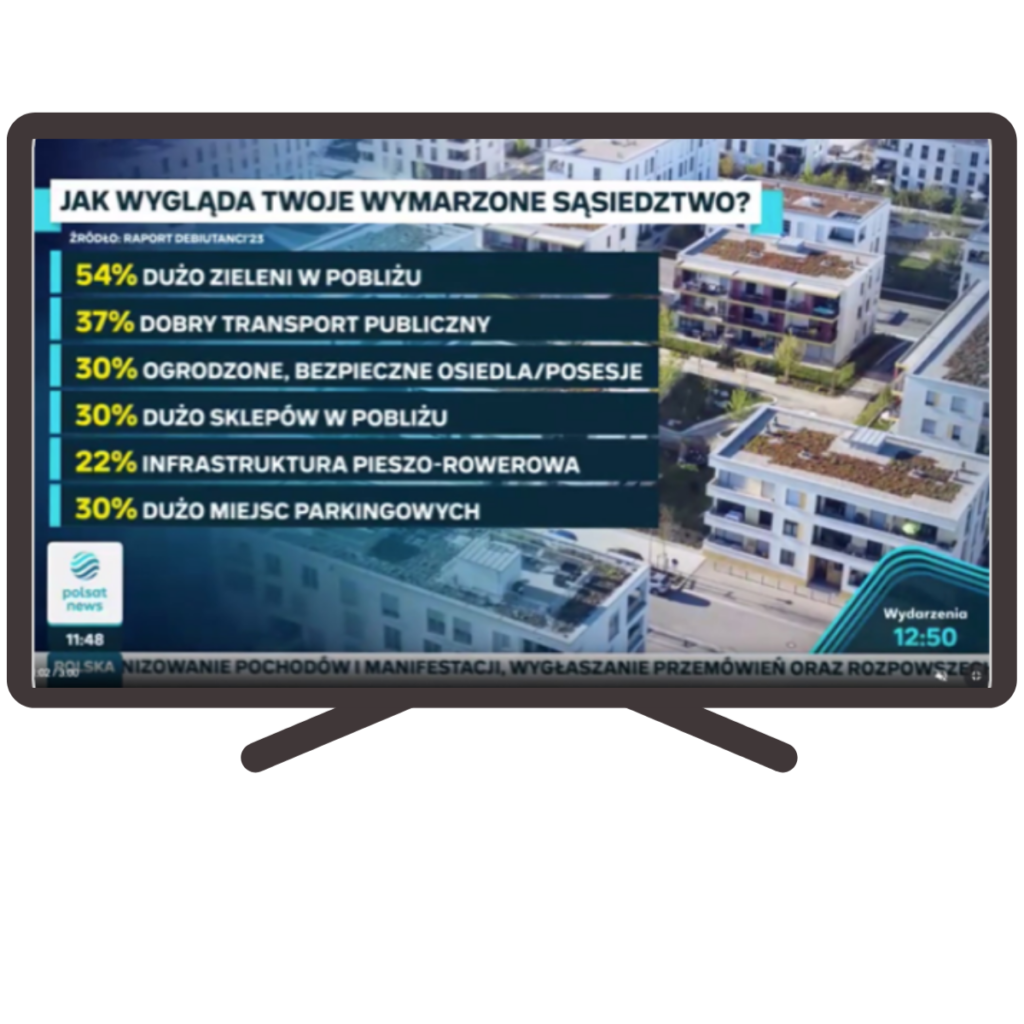
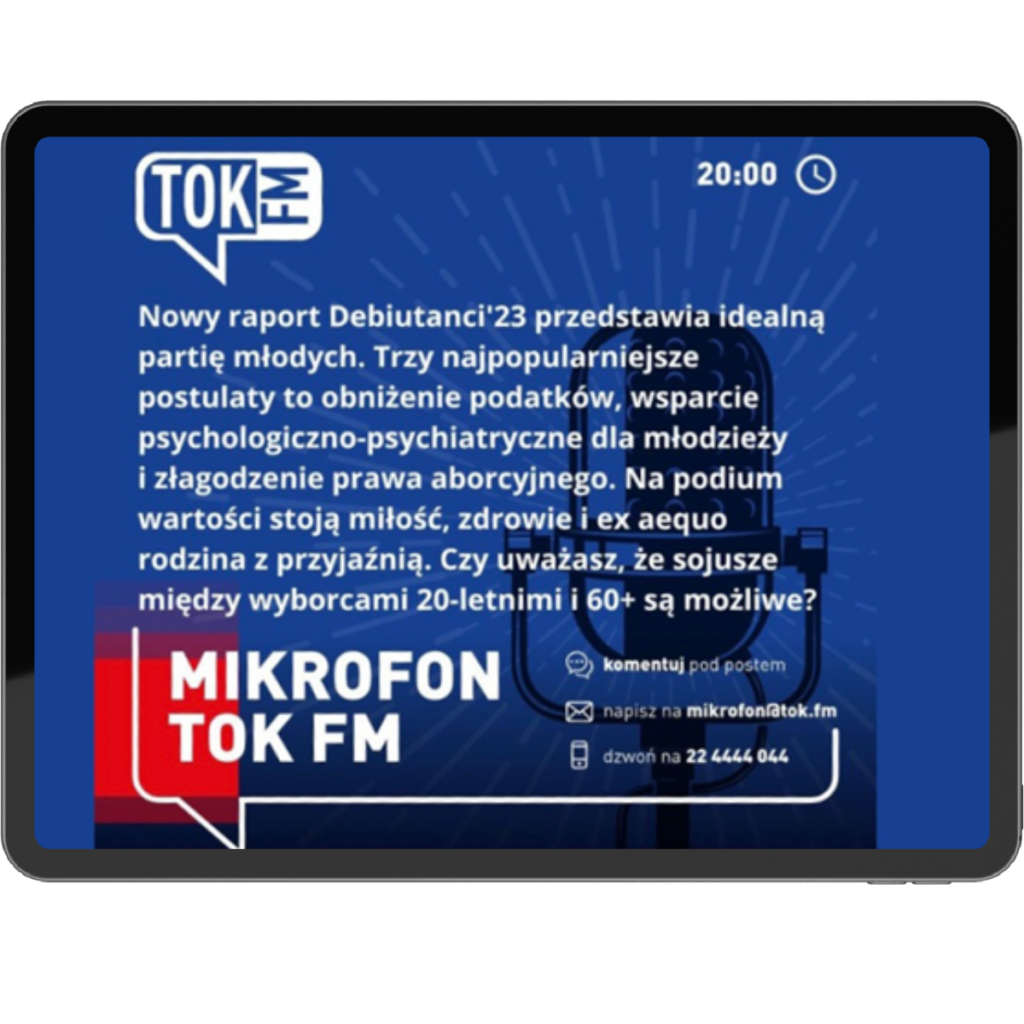
results: over 280 publications about the study, increased voter turnout among the youngest demographic, nomination in the Złote Spinacze competition in the special category Research&Insight

How did we introduce the topic of air quality into the election campaign?
The research project “Debiutanci ’23” was designed as a tool to introduce the topics of air quality and public health into the election campaign by analyzing the attitudes of people debuting on the political scene.

The PR campaign, launched alongside the publication of the report “Debiutanci ’23” prepared jointly by Profeina and Lata Dwudzieste, was more than just a one-off pro-turnout activity. The starting point was the question of which social issues are important to approx. 1.5 million young Polish women and men voting for the first time and whether the topic of air quality is reflected in the priorities of candidates seeking a mandate.
Activities were carried out thanks to the cooperation between Profeina and the Clean Air Fund, an international non-profit organization working toward systemic solutions to air quality problems.
1.
Challenge: neutrality and credibility in polarized times
An election campaign is a time of intense polarization, simplification, and the instrumental use of data. The key challenge was to design the research and its communication in such a way that the topic of air quality would appear in the public debate within a broader context, relevant to the media and interesting to young voters.
2.
Insight: a new group of voters
Analysis of the election context showed that a large, yet poorly recognized group of first-time voters was joining the electorate. Their perspective, especially regarding long-term social issues such as the environment and public health, was rarely described.
The research project was intended to fill this gap: to examine how young voters perceive air quality against the background of other social challenges and to compare their expectations with the declarations and sensitivity of candidates running in the elections.

3.
PR activities: research as a tool for dialogue
Profeina designed the project communication around:
- research results regarding the main concerns of young Polish women and men, their views on key social challenges, including those related to health, quality of life, and air quality;
- involving a range of allies from non-governmental organizations and social movements, particularly those led by or for young people (Inicjatywa Wschód, Młodzieżowy Strajk Klimatyczny, Rodzice dla Klimatu, Fundacja Impuls, Dom Spokojnej Młodości, More in Common, Center for Citizenship Education, Akcja Demokracja);
- consistent media relations in national and opinion-forming media, presenting the study as a source of data and a pretext for conversation, rather than an element of political agitation.

4.
Results: a topic present in the campaign, not in the dispute
Thanks to consistent, data-driven communication, the “Debiutanci ’23” report functioned in the media as a credible source of knowledge about the expectations of a new group of voters and a point of reference for discussions on the priorities of future parliamentarians. The most impressive result was the increase in election interest among the young generation—in the 18-29 age group, voter turnout increased from 46% in 2019 to 71% in 2024. The Debiutanci ‘23 campaign contributed its part to this growth.
Publications about the report
0
+
Social allies of the campaign
0
M
Record voter turnout among the youth!
0
%